
Nothing is broken. Nothing is on fire.
So your network must be fine…right?
That assumption is exactly how outdated business networks get expensive.
Most network problems don’t announce themselves with total failure. They show up as tiny, daily annoyances that everyone shrugs off, slow logins, glitchy video calls, cloud apps that lag just enough to be irritating. No one files a ticket. Everyone loses time.
That’s not “fine.” That’s death by a thousand loading wheels.
The Cost You Don’t See on a Spreadsheet
Here’s what we hear all the time:
- “It’s not slow… it just hesitates sometimes.”
- “The phones cut out once in a while.”
- “The Wi-Fi works better in some rooms than others.”
- “We’ll deal with it later.”
Later gets expensive.
Every delay compounds. Meetings drag. Employees improvise workarounds. IT keeps patching instead of fixing. And leadership assumes the problem is software, user error, or “just how networks are.”
They’re wrong.
Stop Blaming the Wi-Fi
This is where most businesses go off the rails.
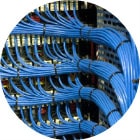
Wi-Fi gets blamed because it’s visible. The real problem usually isn’t. The wired infrastructure behind it, outdated cabling, overloaded switches, insufficient PoE, quietly strangles performance before the signal ever reaches the air.
You can install the newest access points available and still get mediocre results if the backbone feeding them is stuck in the past. We see this constantly in Columbus offices, warehouses, medical facilities, and schools.
The Wi-Fi is just the messenger. Don’t shoot it.
Your Cabling Wasn’t Built for How You Work Now
When your network was installed, it probably supported:
- Basic internet access
- A few desktop computers
- Maybe a phone system
Now it supports:
- Cloud-based software
- Video conferencing
- Security cameras
- Access control
- Wireless everything
- Devices that draw power and data over the same cable
That’s not an evolution, that’s a completely different workload.
Older cabling might still function, but it’s running hot, maxed out, and one bad day away from becoming the bottleneck no one planned for.
PoE Changed the Rules (Most Networks Haven’t Caught Up)
Power over Ethernet used to be simple. Now it isn’t.
Modern PoE networks power cameras, access systems, sensors, and high-performance wireless hardware. That changes how networks need to be designed, from cable quality and bundling to switch capacity and heat management.
Ignore that, and you don’t just risk poor performance. You shorten the lifespan of the entire system.
Why More Businesses Are Quietly Switching to Fiber
Fiber isn’t just for massive campuses anymore.
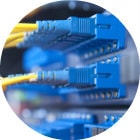
More businesses are using fiber inside buildings to connect network closets, support high-traffic areas, and future-proof their infrastructure. It’s faster, more reliable, and far less sensitive to interference.
If your business runs on cloud apps, video, or real-time data, fiber often makes sense sooner than people expect.
The Expensive Mistake: Upgrading Hardware Without a Plan
Swapping routers or access points feels productive. It’s also one of the fastest ways to burn money if the underlying network hasn’t been evaluated.
A real network assessment looks at:
- Cabling condition and capacity
- Network layout and choke points
- PoE demands
- Growth plans
- Security and redundancy gaps
That’s how you fix problems permanently instead of chasing symptoms.
Bottom Line
If your network hasn’t been reviewed in years, it’s almost certainly holding your business back, quietly, consistently, and expensively.
At Custom Cabling, we help Columbus businesses uncover what’s actually causing network pain and design infrastructure that works today and scales tomorrow.
Because “fine” is usually the most expensive lie a network tells.